Body shape of huemul, as documented for other species, varies according to age, sex, season and location.


 a)  Age: there are obvious differences between fawns, subadult and mature adults. Thus it is essential to

       consider the age, especially if evaluating bones.


 b) Sex: huemul are sexually dimorphic, important especially when evaluating bones.


 c)  Season: as all cervids in cold-temperate areas, huemul go through distinct cycles of leanness and fatness,

       as well as summer and winter coats. Descriptions of shape thus depend on the annual season.


 d) “Location”:   it is a collective concept whose importance is divided among several factors:

   - temperature: low temperature results in shorter legs                          Allen's ecogeographical rule

   - altitude: high altitude means lower oxygen pressure which results in shorter legs          Read more...

   - topography: affects amount and type of exercise, and thus muscle and bone mass       Read more...

   - vegetation (function of temp., precip., soil, topogr.): affects energy balance                    Read more...


   - nutrition extracted from soil-plant system: availability of micro nutrients differs across the landscape, and several of these affect body growth and shape.


Photos:

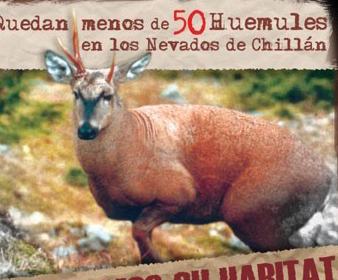
Chunky huemul

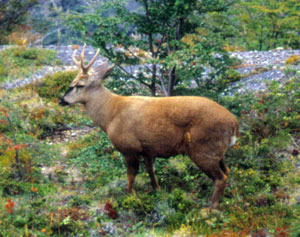
Slimmer huemul

wpcf436d35.jpg
wpa16dd42e.jpg